.webp)

NZ MB
Project Summary
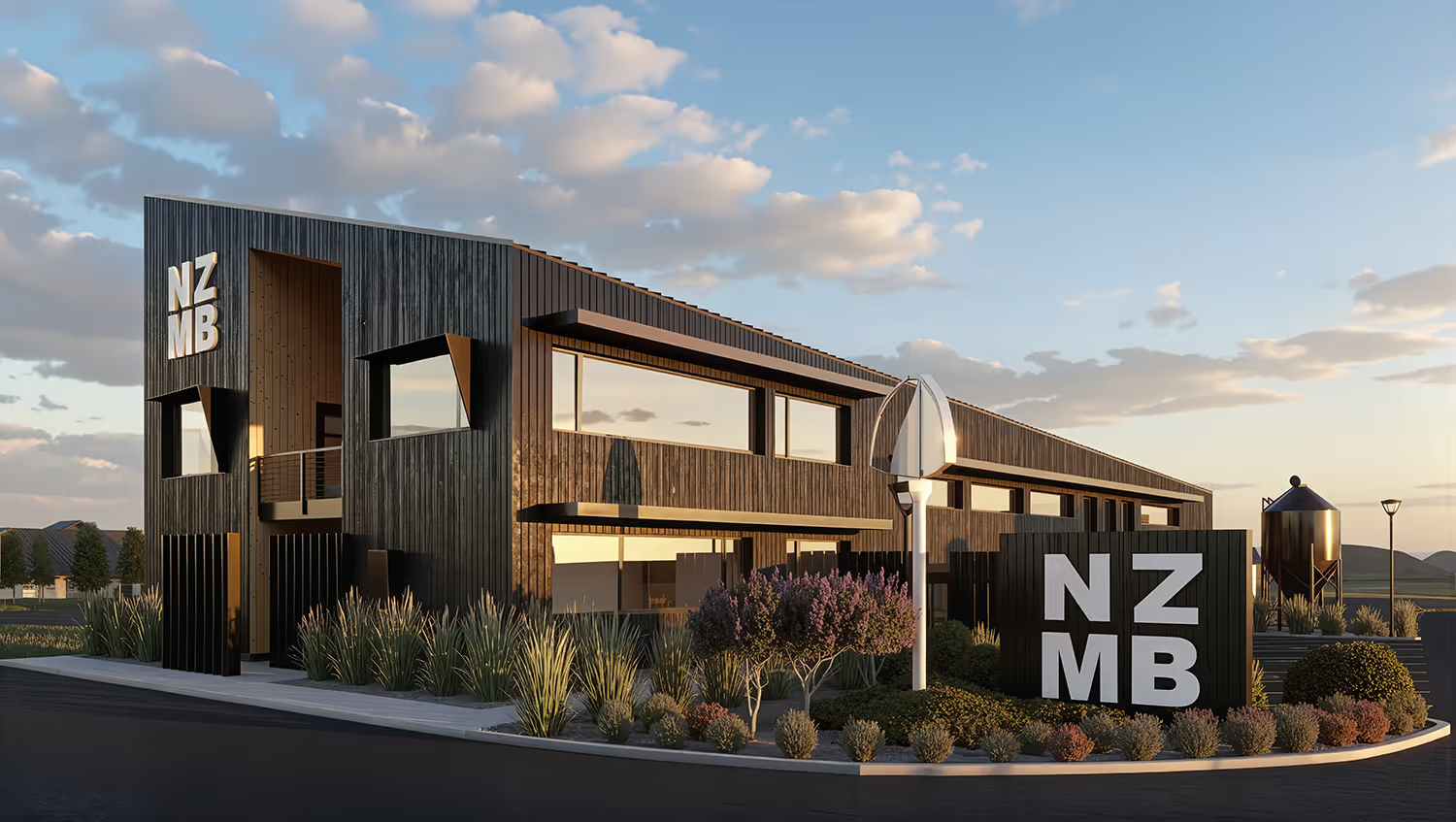
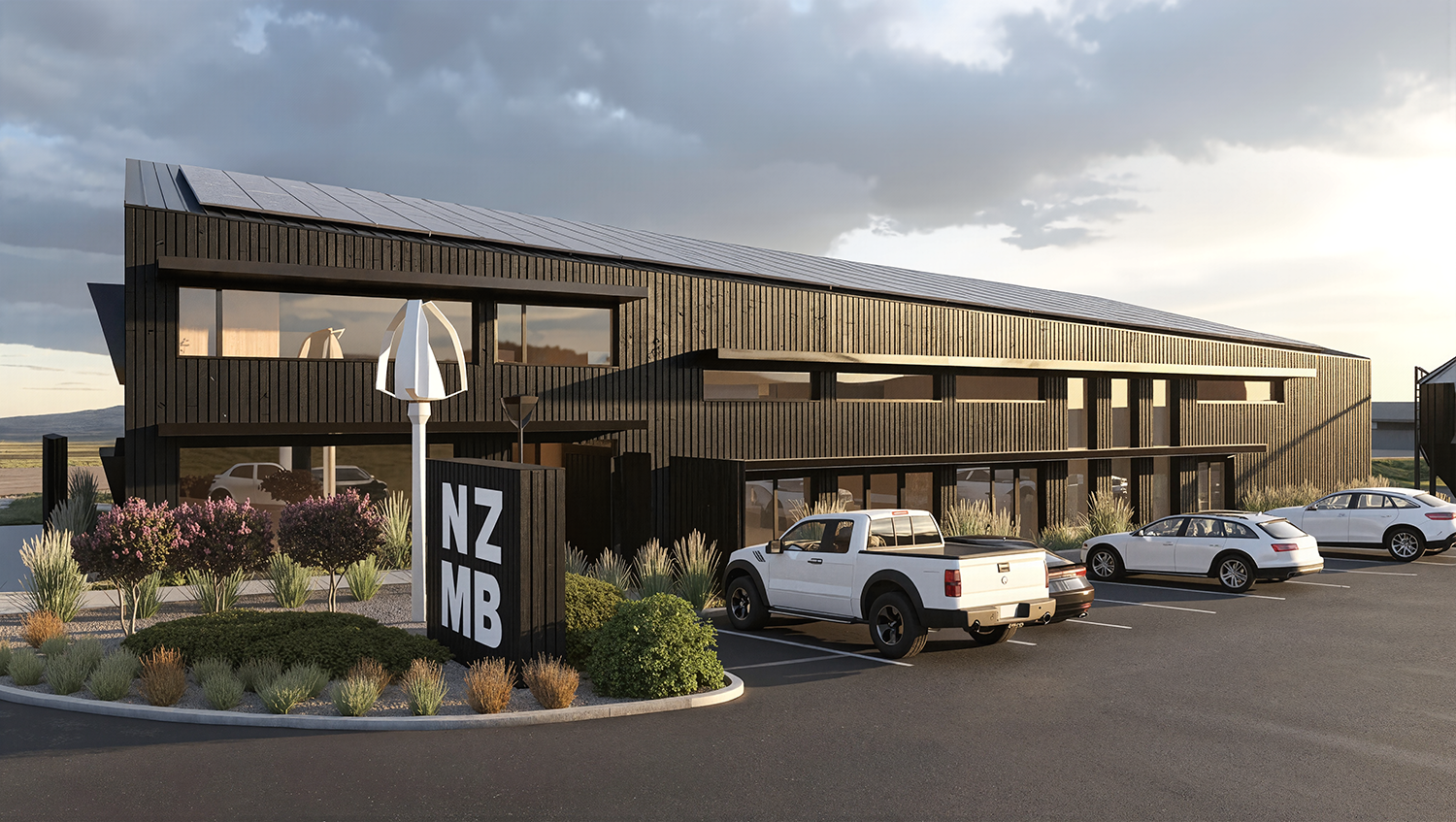
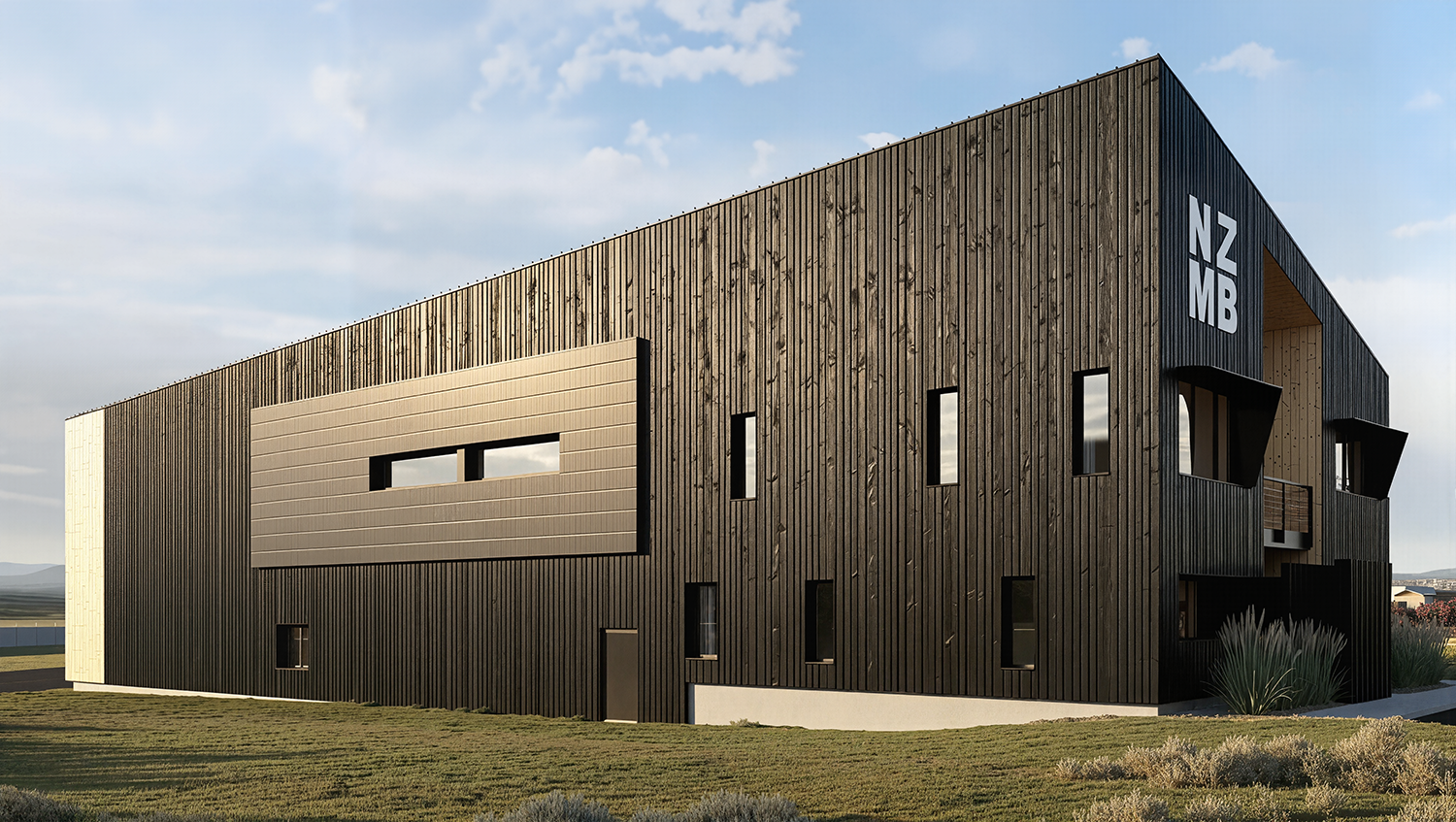
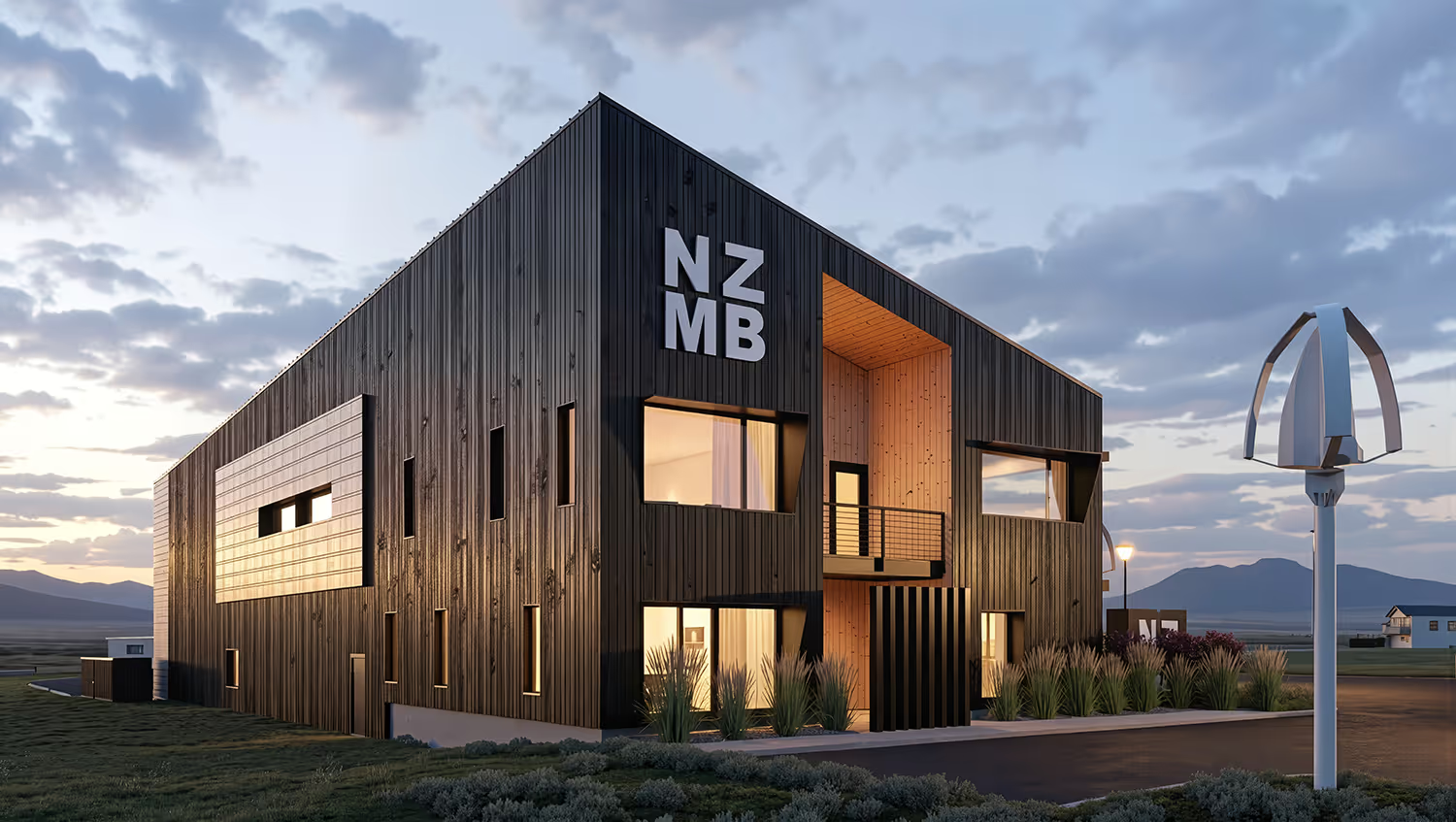
NZ MB was designed to be the first Net Zero Micro Brewery in the country. Every element of is design, from its simple form and orientation, to the materiality and building systems prioritized the goal of being net-zero. It was conceived of as a CLT structure to provide both a warm natural wood aesthetic to the interior, as well as to ensure the structure of the building would sequester carbon over time. The building was meant to be clad in black Shu-Sugi Ban (Charred) wood siding. The black exterior delivers a pronounced natural + durable aesthetic perfectly defining the building in the Prairie landscape. The program for the building was as unique as the design. In addition to the Micro Brewery, the program included a pub which would have sold the expertly brewed products of the brewery. Finally the west portion of the building was intended to be the owners residence as well as offer a couple short term stay apartments. In order to achieve the net-zero status, the building is designed using passive house principles which informed its' orientation, form, glazing ratios and high R-value building envelope. Furthermore, high efficiency building systems including a geo-exchange loop were to be used to ensure minimal energy use. While a rooftop solar array and small scale wind turbines were to be employed to generate renewable electricity for the building. If realized this would have been a landmark project in Net Zero architecture.
Virtual Flyover
Concept
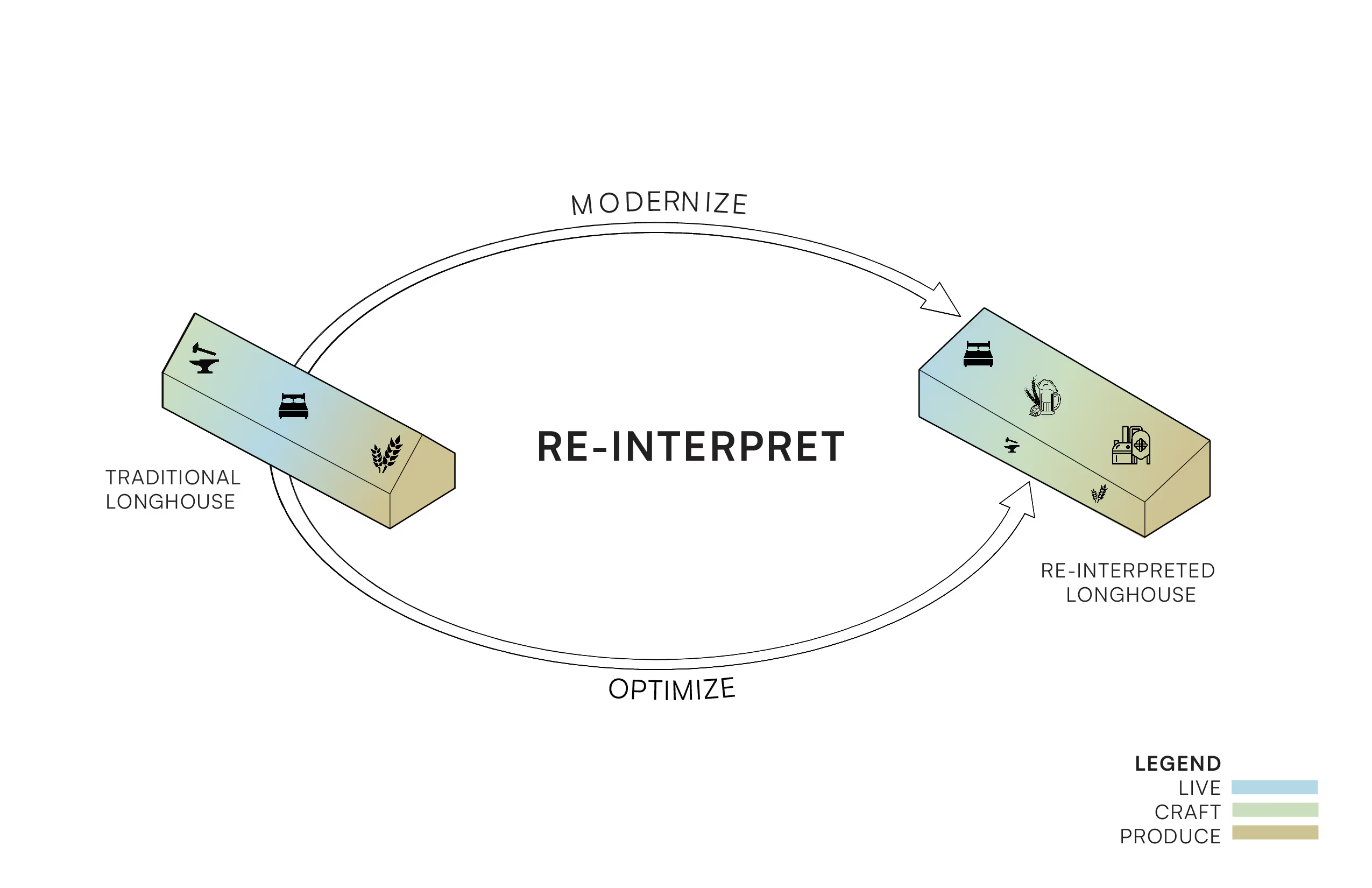
The concept of NZ MB entailed re-interpreting the traditional Viking Longhouse. Traditionally the long house involved a simple A-frame form, rectangular building in which the living quarters were located in the center; while the craft or making spaces and production (farming or livestock) spaces were located on either end. The re-interpreted modern manifestation of the Longhouse involved re-ordering the program to place the craft space in the center, and place the living and produce areas on either end. In addition the tradional A-frame form was optimized to maximize the efficiency of the rooftop solar array.
Massing
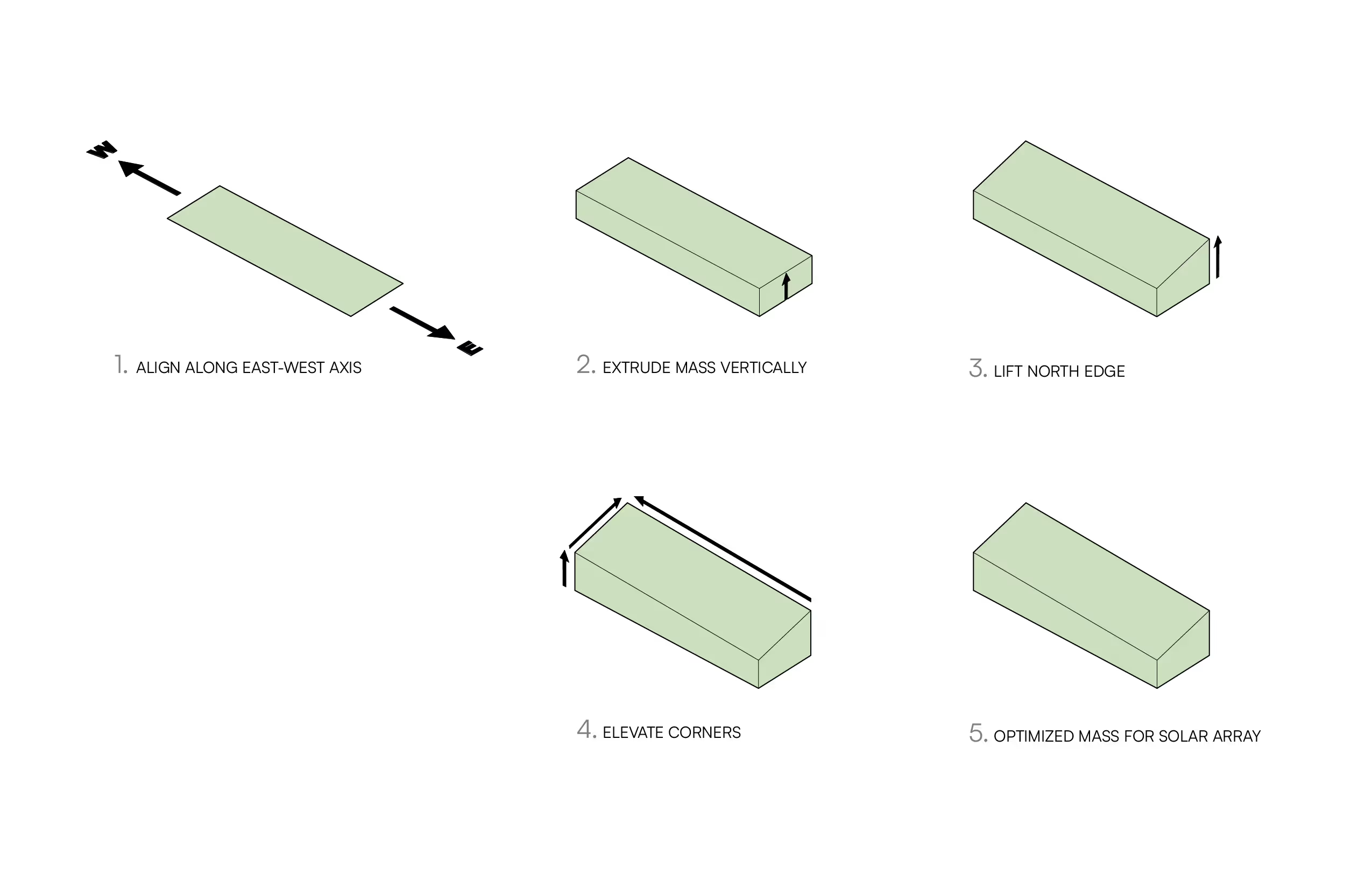
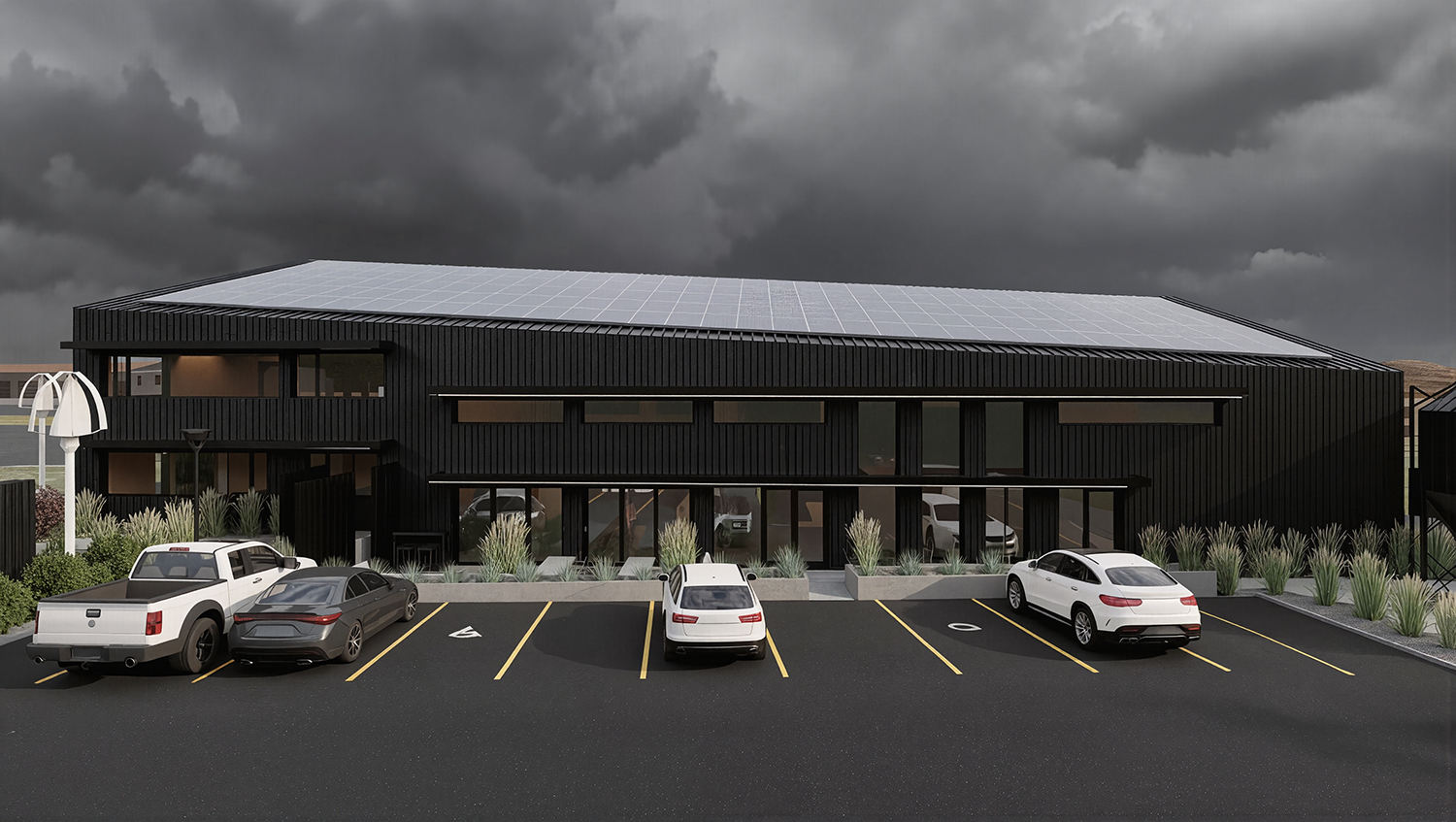
The massing of NZ MB was intentionally kept very simple. It was driven by the concept of creating a modernized longhouse as well as the desire to optimize the design for the electrical production of the rooftop solar array. The first step was to align the mass so the long side of the rectangle was oriented east-west. After the mass was extruded, the north edge of the roof was lifted to ensure the solar array would be angled to the south. This mass was then further optimized by lifting the southwest and northwest corners. This ensured the required roof height for the programming within the building, while also ensuring a slight easterly angle to the roof. Solar panel efficiency is maximized in the mornings, therefore this mass will ensure the optimal electrical production from the rooftop solar array.
Programming

Sustainable Design
In order for NZ MB to achieve its net-zero goals, every aspect of its design was fine tuned towards this endeavor. It began with applying passive house principles for its orientation and massing. The long axis orienation running east-west ensured the southern glazing had the most opportunity for passive heating from solar gains. The massing is intentionally simple, creating as few geometric thermal bridges as possible. The form was optimized to orientate the solar array towards the southeast ensuring optimal efficiency of the rooftop solar array. High efficiency glazing was primarily oriented towards the south to take advantage of passive solar heat gains. Some glazing was also installed along the west facade to allow for additional gains during the shoulder seasons. Very little glazing was installed on the north elevation to minimize heat loss. As overheating can be an issue even in cold climates, exterior shading devices were included in the design. The horizonal shading devices on the south elevation were designed to only allow heat gains during the winter and partially during should seasons when it would have been beneficial. The same is true of the shading devices on the west facade, which also shaded the glazing vertically from the south to avoid excessive heat gains. The materials and envelope assemblies for the building also priorized sustainability. The buildings exterior walls and roof structure were intended to be CLT (cross laminated timber) to ensure a low embodied carbon. The use of renewable materials was enhanced through charred wood cladding. The wall assemblies were envisioned as having exterior dense pack cellulose installed between I-joists to ensure minimal thermal bridging. This assembly would have been enhanced by a rainscreen before the installation of finish cladding. The wall assembly would have provided a minimum R-40 insulation value. Meanwhile the roof was intended to achieve an R-100 through the installation of rigid mineral wool insulation panels mounted on the exterior of the CLT roof panels. In addition to these passive house approaches to the design, active energy generation strategies included the large rooftop solar array, as well a three, small scale vertical wind turbines. Finally, a geo-exchance loop was intended to be installed to ensure minimal energy usage for heating and cooling the building. All of these elements together would have ensured the successful achievement of a net-zero distinction for the NZ MB.

Project Gallery


.svg)
.svg)
.svg)
.svg)